
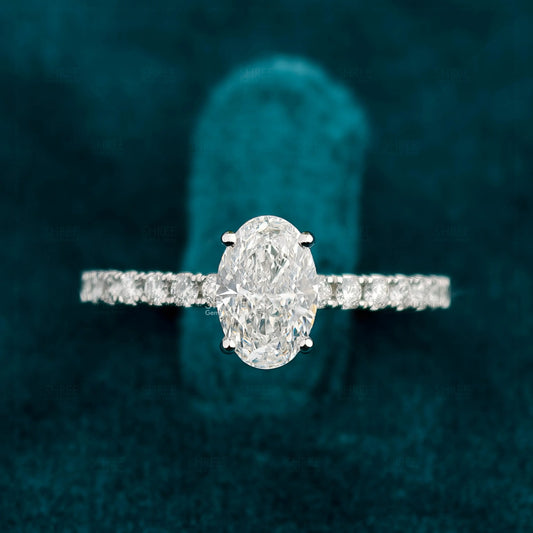

Moissanite vs Lab Diamond: Key Differences, Price, and Which Is Better
Choosing a gemstone for an engagement ring or a meaningful piece of jewelry is an important decision. Two popular options today are lab grown diamonds and moissanite. At first glance, these stones can look very similar. Both are created in laboratories and offer impressive brilliance and clarity. Many couples today compare moissanite vs lab grown diamonds when choosing an engagement ring because both stones offer beauty and affordability.
However, they are not the same gemstone. They differ in composition, appearance, price, durability, and long-term value. Understanding these differences can help you decide which stone is the right choice for your engagement ring or jewelry piece.
What Are Lab Grown Diamonds?

Lab grown diamonds are real diamonds created in controlled laboratory environments that replicate the natural conditions in which diamonds form deep inside the Earth.
Scientists produce them using two main methods:
-
High Pressure High Temperature (HPHT)
-
Chemical Vapor Deposition (CVD)
Both processes create diamonds with the same chemical composition, physical properties, and crystal structure as natural diamonds. They are made of pure carbon arranged in a crystal lattice, just like mined diamonds.
Because they are grown in laboratories, they avoid the environmental impact and ethical concerns sometimes associated with traditional diamond mining.
Like natural diamonds, lab grown diamonds are graded using the 4Cs: cut, color, clarity, and carat weight. They can also be certified by respected gemological laboratories such as the Gemological Institute of America or the International Gemological Institute.
What Is Moissanite?

Moissanite is a completely different gemstone from diamond. It was first discovered in 1893 by the French scientist Henri Moissan while studying a meteor crater.
Natural moissanite is extremely rare, so nearly all moissanite used in jewelry today is lab created.
Unlike diamonds, which are made of carbon, moissanite is composed of silicon carbide. Although the materials are different, moissanite has a brilliant sparkle that makes it visually similar to diamonds.
Moissanite is known for its exceptional brilliance and strong rainbow flashes, which many people find attractive. However, some buyers prefer the more classic white sparkle of a diamond.
Lab Grown Diamond vs Moissanite: Key Differences
Both gemstones are beautiful and durable, but they differ in several important ways.
| Feature | Lab-Grown Diamond | Moissanite |
|---|---|---|
| Composition | Carbon crystal | Silicon carbide |
| Hardness (Mohs Scale) | 10 | 9.25 |
| Brilliance | Bright white sparkle | Very bright with strong rainbow flashes |
| Fire | Moderate | Very high |
| Durability | Extremely durable | Very durable |
| Certification | GIA, IGI, GCAL | No universal grading system |
| Price | Higher | Much more affordable |
| Resale Value | Moderate | Very low |
This comparison helps highlight the main differences between these two gemstones.
Visual Differences Between Lab Diamond vs Moissanite
Although lab grown diamonds and moissanite may appear similar at first glance, subtle differences become noticeable when you look more closely.
Color
Lab-grown diamonds are graded using the same color scale as natural diamonds, ranging from D (colorless) to Z (light yellow or brown).
They can also be produced in fancy colors such as yellow, pink, or blue.
Moissanite is typically sold as colorless or near-colorless, but under certain lighting conditions it may show faint yellow or gray tones. High-quality modern moissanite has improved significantly in color appearance.
Brilliance and Fire
Brilliance refers to the amount of white light reflected by a gemstone, while fire refers to the colored rainbow flashes produced when light disperses.
Moissanite has a higher refractive index than diamond, meaning it bends light more strongly. As a result, moissanite produces more colorful flashes of light. This happens because moissanite has a refractive index of about 2.65–2.69, which is higher than a diamond’s 2.42, explaining why moissanite often produces stronger rainbow flashes.
Some people love this lively rainbow sparkle, while others prefer the more subtle and classic brilliance of a diamond.
Hardness and Durability
Diamonds, whether natural or lab-grown, are the hardest known natural material, scoring 10 on the Mohs hardness scale.
Moissanite is also very durable, with a hardness of 9.25, making it highly resistant to scratches and suitable for everyday wear.
Although both gemstones are durable enough for engagement rings, diamonds still have a slight advantage in long-term scratch resistance.
Price Differences Between Moissanite vs Lab Diamond
One of the biggest reasons buyers consider moissanite is the significant price difference.
For example:
-
A 1-carat moissanite may cost only below a hundred dollars.
-
A 1-carat lab grown diamond may cost several thousand dollars, depending on its cut, color, and clarity.
Because of this price gap, many people choose moissanite if they want a larger stone for the same budget.
Lab-grown diamonds are more affordable than natural diamonds but still carry a higher price because they are chemically identical to mined diamonds.
Certification and Grading
Lab grown diamonds are graded using the same system as natural diamonds.
A grading report typically includes details about:
-
Cut
-
Color
-
Clarity
-
Carat weight
Moissanite does not follow the same standardized grading system used for diamonds. Instead, sellers often describe stones using terms like "premium" or "super premium," which may vary between retailers.
For this reason, it is important to purchase moissanite from a trusted jeweler who provides clear quality information.
Ethical and Environmental Factors
Both lab diamonds and moissanite are popular among buyers who want more ethical and environmentally responsible options.
Because they are created in laboratories, they avoid the environmental disruption and supply chain concerns sometimes associated with traditional diamond mining.
For many couples, this makes both stones attractive conflict-free alternatives.
Resale and Long-Term Value
Another factor to consider is resale value.
Natural diamonds generally maintain stronger resale value over time because of their rarity and long established market demand.
Lab created diamonds currently have lower resale value, largely because supply continues to grow and prices have gradually decreased.
Moissanite usually has little resale value, since it is widely available and less recognized as a luxury gemstone.
For most engagement ring buyers, however, resale value may not be a priority compared to beauty, durability, and affordability.
How to Tell the Difference Between Moissanite and Diamonds
Although these stones can look similar, there are several ways experts tell them apart.
Light Reflection
Moissanite often produces stronger rainbow flashes than diamonds.
Double Refraction
Moissanite is doubly refractive, meaning light splits into two rays inside the stone. Under magnification, this can create slightly doubled facet reflections.
Diamond Testers
Standard diamond testers usually identify lab diamonds as real diamonds because they share the same thermal conductivity as natural diamonds. Moissanite requires a specialized tester.
Price
If a very large stone is offered at an unusually low price, it may be moissanite rather than a diamond.
Which One Should You Choose?
The right choice depends on your priorities and personal preferences.
Choose a lab diamond if you want:
-
A real diamond with classic sparkle
-
A gemstone graded using the 4Cs
-
Maximum durability and scratch resistance
Choose moissanite if you want:
-
A more affordable option
-
A larger stone for the same budget
-
Strong rainbow brilliance
Both gemstones can make beautiful engagement rings and are excellent alternatives to mined diamonds.
Care and Maintenance of Lab Diamond vs Moissanite
Both stones are relatively easy to maintain.
You can clean lab created diamonds and moissanite using warm water, mild soap, and a soft brush. Regular cleaning helps remove oils and dirt that reduce sparkle.
With proper care, both gemstones can remain brilliant and beautiful for decades.
Final Thoughts
Lab-grown diamonds and moissanite offer two modern ways to enjoy stunning gemstones without the high price or ethical concerns sometimes associated with mined diamonds.
Lab-grown diamonds provide the classic look and composition of a true diamond, while moissanite offers remarkable brilliance and affordability.
Ultimately, the best choice depends on what matters most to you—whether that is authenticity, sparkle, size, or budget.
FAQs About Moissanite vs Lab Diamond
1. Is lab diamond better than moissanite?
It's not necessarily better, but it offers different benefits. Moissanite is more affordable and produces stronger rainbow flashes, while lab-grown diamonds have the same physical and chemical properties as natural diamonds. The best choice depends on your budget and personal preference.
2. Can you tell the difference between moissanite and a lab grown diamond?
To the naked eye, it is often difficult to tell the difference. However, gemologists can identify them using specialized tools because moissanite shows stronger fire and has a different refractive index compared to diamonds.
3. Do lab grown diamonds last as long as natural diamonds?
YES. Lab-grown diamonds are real diamonds with the same hardness and durability as natural diamonds. They rank 10 on the Mohs hardness scale, making them suitable for everyday jewelry like engagement rings.
4. Will moissanite lose its sparkle over time?
No. Moissanite maintains its brilliance for many years when properly cleaned and cared for.
5. Do lab grown diamonds hold their value?
Lab-grown diamonds usually do not hold their resale value as well as natural diamonds. Because they can be produced in laboratories, the supply is higher, which often lowers their resale price over time. However, many people still choose lab-grown diamonds because they offer excellent beauty, durability, and a more affordable price compared to natural diamonds.